Folding Types for Brochures
Bi-Fold Brochures


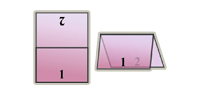
Bi-fold brochures stand as one of the most widely recognized types of brochures available. They consist of a single sheet of paper folded in half, resulting in four panels: a front cover, a back cover, and two internal pages. Additionally, catalogs and multi-page brochures are created by stacking multiple sheets of paper and subsequently folding them. The fold line can be positioned along either the shortest or longest side of the sheet.
Tri-Fold Brochures
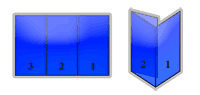
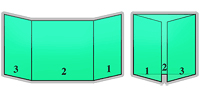
Trifold brochures, a highly favored brochure style, are created by folding a sheet of paper twice. To achieve this fold, start by folding the right panel inward, followed by folding the left panel so that it aligns atop the right panel when viewing the inside. This type of brochure features six panels in total: three on the inside and three on the outside. The outside panels are nearly identical in size, with one panel being slightly shorter to allow for folding inside the other two without overlapping.
Roll-Fold Brochures
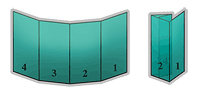
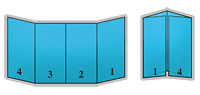
Roll fold brochures, another popular brochure format, consist of a single sheet of paper with three fold lines, creating four panels on each side. In roll fold brochures, there are two large panels of equal size, succeeded by a smaller one, and then an even smaller one. To fold a roll fold brochure, commence by folding the smaller panel inward, and continue folding in that direction.
Z-Fold Brochures
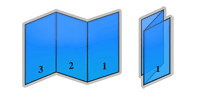
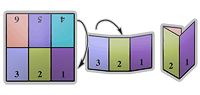
Also known as a fan fold or zig-zag fold, the z-fold brochure shares similarities with the trifold format as both involve folding a sheet of paper three times, yielding three outside panels and three inside panels. However, what distinguishes the z-fold is the way it is folded – one panel is folded inwards, while the other is folded outward, forming the shape of the letter 'Z'. Because the panels do not fold into one another, they maintain the same width throughout.
Double-Parallel-Fold Brochures
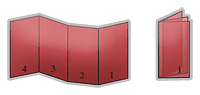
A double-parallel brochure is characterized by three parallel folds, resulting in eight panels (four on each side of the paper sheet). In this format, the sheet of paper is initially folded in half and then folded in half once more, effectively tucking one half of the sheet inside the other. This arrangement causes the inside half's panels to be smaller in size. Within a double-parallel brochure, two of the panels are slightly shorter, allowing them to fold neatly inside the other two without overlapping.
French-Fold Brochures
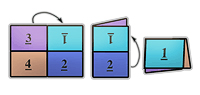
French Fold brochures, also known as right angle fold brochures, are characterized by two perpendicular fold lines that resemble a cross. To create this format, the sheet of paper is first folded in half horizontally and then folded in half vertically. Consequently, French Fold brochures feature four panels on each side.
On a side note, The term "French fold" for this type of folding in printing and paper terminology is believed to have originated from the historical association of France with fine art, literature, and craftsmanship. French artists and publishers were known for producing intricate and beautifully folded printed materials, such as books, maps, and pamphlets. These folded materials often featured complex folding patterns, including the type of folding seen in French Fold brochures.